Debt Done

Free Debt Repayment Calculator

Work out when you could be debt-free, how much interest you might pay, and how snowball and avalanche repayments compare.

  • Free
  • No sign-up
  • Figures stay on your device

Enter your debts

Add one or more debts to see when you could become debt-free.

Debt 1

How much you still owe.

The yearly cost of borrowing.

What is APR?

Annual percentage rate. You'll find it on your statement, agreement or lender's app. A best estimate is fine, and use 0 if there is no interest.

What you plan to pay each month.

Your figures stay in this browser. They aren't sent anywhere or saved.

Debt Done app

Your repayment plan is just the beginning.

A plan works best when you can see it moving. Debt Done is a free app that helps you keep going, one payment at a time.

  • Track outstanding debts

    See everything you owe in one place.

  • Monitor your progress

    Follow your repayment journey and celebrate milestones.

  • Compare repayment strategies

    Explore different ways to pay off what you owe.

  • Support your financial wellbeing

    Check in on how you feel about money, without judgement.

Store links coming soon.

You'll enter your debts in the app separately. Results from this calculator aren't transferred automatically.

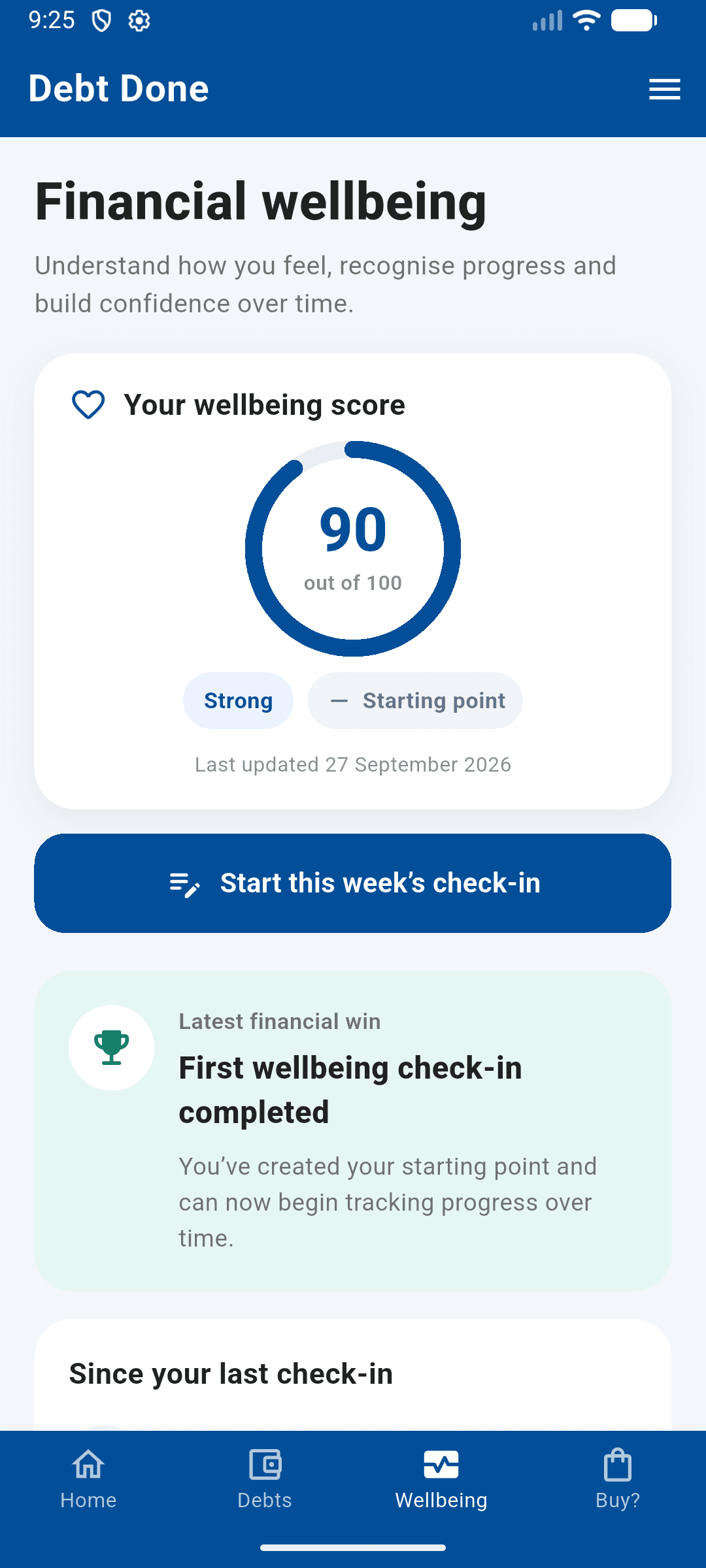
Debt Done financial wellbeing check-in screen
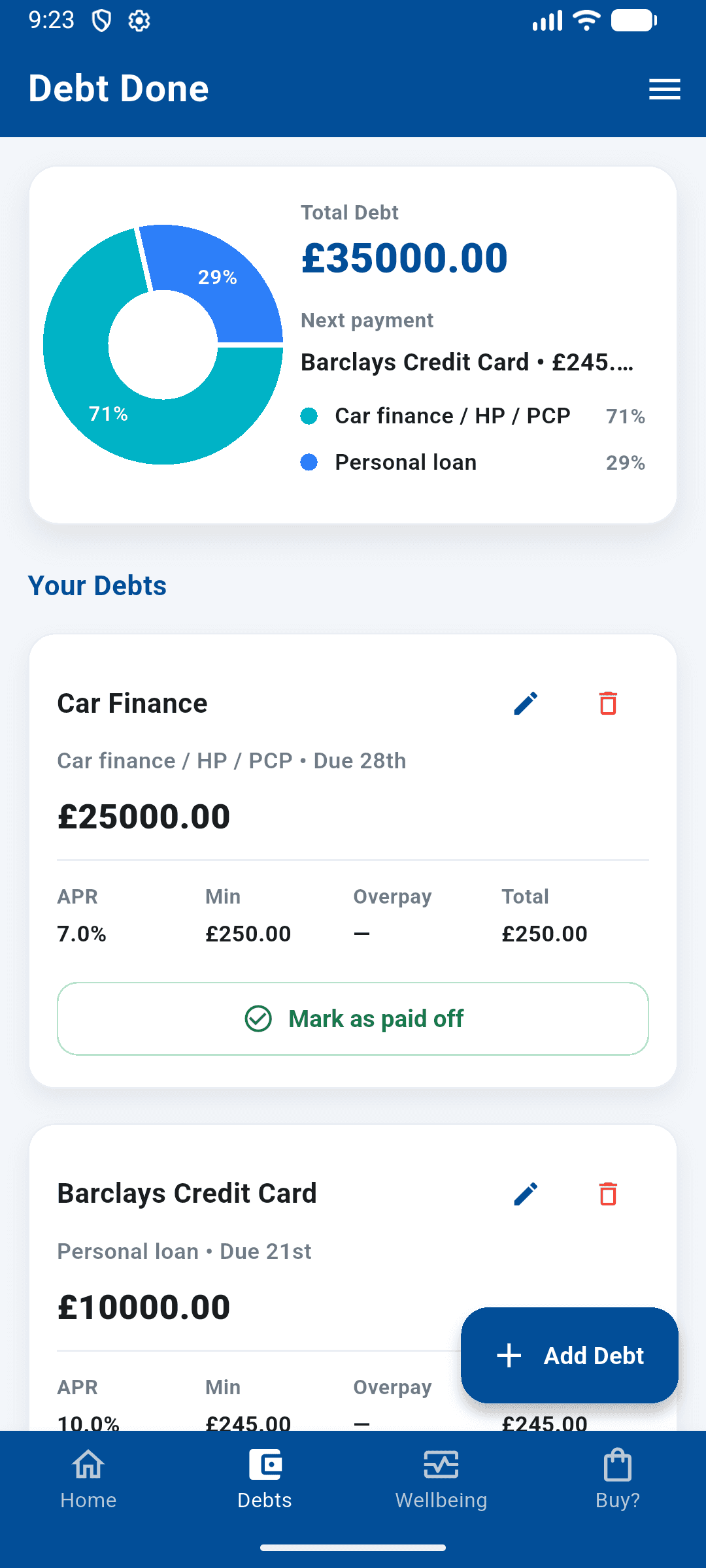
Debt Done dashboard showing debts, balances and progress

The basics

How the debt repayment calculator works

This free UK debt repayment calculator turns a few simple numbers into a plan you can see: when you could be debt-free, how much interest you might pay in total, and how different ways of repaying compare. You don't need to create an account, and the figures you enter stay on your device.

  1. Add your debts

    Enter what you owe, the interest rate (APR) and what you plan to pay each month. A name is optional.

  2. See your plan

    Get an estimated debt-free date, the interest you could pay and a chart of your balance falling over time.

  3. Try ways to improve it

    Compare repayment methods and see what a little extra each month could mean, if it's affordable for you.

Paying it off

How long does it take to pay off debt?

Three things decide how long it takes: how much you owe, the interest rate (APR), and how much you pay each month. Interest is charged on what you still owe, so a bigger balance or a higher rate adds more each month, and paying more each month brings your debt-free date closer.

Example: £5,000 at 22.9% APR

What different monthly payments could mean (estimates).

Time to clear £5,000 at 22.9% APR, and the interest paid, at different monthly payments
Pay a monthTime to clearInterest
£1255 years 9 months£3,597.21
£1504 years 3 months£2,525.82
£2002 years 10 months£1,610.20
£3001 year 8 months£951.88

Notice how much the interest changes: paying £300 instead of £125 a month shortens the journey by more than four years and cuts the interest by about £2,645. Each extra pound goes straight at the balance, so less interest builds up.

There's also a floor. On £5,000 at 22.9% APR, about £87 of interest is added in the first month. If you pay less than that, the balance won't fall at all. Try your own figures in the calculator.

Credit cards

Using this as a credit card repayment calculator

The calculator works for credit cards, store cards, loans, overdrafts and most other debts. For a credit card:

  • Enter your current balance from your latest statement or app.
  • Use the APR for purchases, shown on your statement or agreement, unless most of the balance is something else, such as a balance transfer.
  • Enter what you plan to pay each month. Try a figure you can keep up.
  • Remember it assumes no new spending on the card, so leave it out of the plan until the balance is cleared.

Card providers set a minimum payment, which is usually small. Paying only the minimum can keep you in debt for many years, and many UK card statements show how long it would take. The calculator uses the fixed amount you choose each month, which is often more than the minimum, so it may show a shorter time than paying only the minimum would.

Cards can also have 0% periods, balance transfer fees or different rates for different types of spending. The calculator doesn't model these, so check your agreement if any apply to you.

Choosing a method

Debt snowball vs debt avalanche

Both the debt snowball and the debt avalanche methods start the same way: pay at least the agreed amount on every debt, then point any spare money at one debt at a time. When that debt is cleared, its payment moves on to the next one. They differ in which debt comes first. The calculator above works out both for your debts, using exactly the same monthly budget, so the comparison is fair.

Highest interest first (avalanche)

Spare money goes to
The debt with the highest APR
Often suits people who want
Keeping the total interest down
Worth knowing
The first debt you target might take a while to clear, which can feel slow.

Smallest balance first (snowball)

Spare money goes to
The debt with the smallest balance
Often suits people who want
Quick wins and staying motivated
Worth knowing
It can cost a little more interest than the avalanche method.

If you have only one or two debts and no spare money to add, the two methods often give the same result. The difference shows up when you have several debts, or some extra to put towards them.

Neither method takes account of priority debts such as rent or mortgage, council tax and energy bills, which should come first, or of whether a debt is secured against something you own.

Paying a little more

How extra repayments affect debt

Interest is charged on what you still owe. Paying a little more means the balance falls faster, so less interest builds up and you reach zero sooner. The effect grows the earlier you do it and the higher the interest rate. The calculator shows how much of any difference comes from moving cleared debts' payments on, and how much from the extra money itself.

Before you pay extra

  • Make sure essentials come first, such as rent or mortgage, council tax, energy and food.
  • Keep a small cushion for unexpected costs, so a surprise bill doesn't push you into new borrowing.
  • Check your agreement for early repayment charges.
  • Only pay what you can sustain. A smaller amount you can keep up beats a bigger one you can't.

Being upfront

Calculation assumptions

DebtDone provides this calculator. It gives estimates, and your real figures will differ. Here is what it assumes.

  • Your APR is turned into a monthly rate so that twelve months of interest add up to your yearly APR.
  • Interest is added once a month, then your payments are taken off. Payments are assumed to happen at the end of each month.
  • Each debt's monthly payment stays the same until that debt is cleared. Real minimum payments often fall as the balance falls.
  • Interest rates stay the same throughout. Rate changes, promotional offers, fees and charges aren't included.
  • No new borrowing, and no missed or late payments.
  • Results are rounded to the nearest penny each month.
  • Lenders often calculate interest daily, so their figures can differ from these estimates.
  • Projections stop after 50 years. If your debts wouldn't be cleared by then, the calculator says so instead of showing a date.

This calculator provides general information, not personal financial advice. It can't take your wider circumstances into account. If you're unsure what's right for you, speak to a free, impartial debt adviser.

FAQs

Frequently asked questions

How long will it take me to pay off my debt?

It depends on how much you owe, the interest rate and how much you pay each month. Enter your debts in the calculator above and it estimates a debt-free date. See how long it takes to pay off debt for a worked example.

How long does it take to pay off £5,000 of debt?

As an illustration, at 22.9% APR a £5,000 debt takes about 2 years 10 months to clear if you pay £200 a month, with around £1,610 in interest. Paying £300 a month takes about 1 year 8 months and costs around £952 in interest. At £125 a month it takes nearly 6 years. These are estimates from this calculator's method. Your own APR and payments will change the answer.

What APR should I enter?

Use the APR shown on your statement, agreement or lender's app. Credit cards often show different rates for purchases and cash withdrawals, so use the one that applies to most of your balance. If you're unsure, a best estimate is fine, and you can adjust it later. Enter 0 if there is no interest.

Which debt should I pay off first?

First make sure you're keeping up with priority debts such as rent or mortgage, council tax and energy bills, because falling behind on these can have more serious consequences. For other debts, paying the highest interest rate first (the avalanche method) usually costs the least interest, while paying the smallest balance first (the snowball method) clears debts sooner. The calculator shows both side by side.

Is the debt snowball or avalanche method better?

Neither is right for everyone. Avalanche usually costs the least interest. Snowball clears debts sooner, which some people find easier to stick with. With only one or two debts and no extra money, they often give the same result. The best method is the one you'll keep going with.

Why might my lender's figures be different?

Lenders usually work out interest daily, and may add fees, change rates or have special offers that this calculator doesn't know about. Treat the results as a helpful guide to plan with, not as a statement from your lender.

What if my monthly payment doesn't cover the interest?

Then the balance won't go down, and could grow. The calculator tells you, and shows roughly what you'd need to pay to start making progress. If that isn't affordable, free, impartial advice can help you explore your options. See UK debt support.

Does this calculator give financial advice?

No. It provides information and estimates to help you understand your options. It doesn't take your wider circumstances into account and isn't personal financial advice.

Is the information I enter saved or shared?

No. The calculator runs in your browser, so the figures you enter stay on your device and aren't sent to us. They aren't saved in cookies, the web address or your browser's storage, and they disappear when you close or refresh the page. Read our privacy policy for how we handle information on this website.

Is the calculator really free?

Yes. It's free to use, and you don't need to sign up or download anything to see your results.

You're not alone

UK debt support

If you're finding it hard to keep up with payments, free and confidential help is available. Getting advice early gives you more options, and you should never have to pay for it.

DebtDone isn't connected to these organisations and doesn't receive anything for mentioning them.